
No products found matching your search.
Guitars
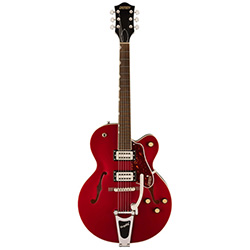



Fender Player II
Modified Stratocaster
HSS Electric GuitarSunshine Yellow
$1079.99
regular price
no reviews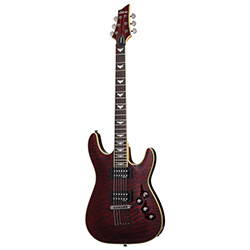
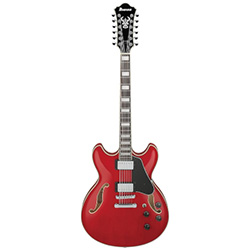
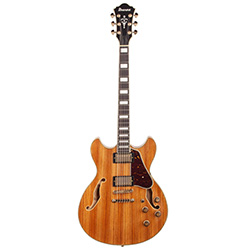
Ibanez AS7312 Artcore
12-String Hollow Body
Electric GuitarTransparent Cherry Red
$629.99
$699.99

History of the Electric Guitar
The electric guitar's story begins in the early 1930s, when musicians and inventors sought ways to make the instrument heard above the growing volume of big bands and dance orchestras. Early experiments with magnetic pickups led to instruments like the Rickenbacker Frying Pan, a cast-aluminum lap steel that proved amplification was possible. By the mid-1930s Gibson's ES-150, paired with the playing of jazz innovator Charlie Christian, showed that an amplified hollow-body guitar could deliver single-note lines with clarity and sustain previously unimaginable. These pioneering designs still relied on acoustic bodies and were prone to feedback, yet they planted the seed for a revolution: the guitar was no longer merely a rhythm instrument but a lead voice capable of cutting through any ensemble.The real explosion arrived after World War II with the solid-body designs of Leo Fender and Les Paul. Fender's Telecaster (1950) and Stratocaster (1954) offered durability, consistent tone, and mass-producible simplicity, while Gibson's Les Paul model delivered rich sustain and a luxurious feel. Suddenly players could crank amplifiers into overdrive, invent new techniques, and chase previously unheard sounds—twang, scream, feedback as musical texture. From Chuck Berry's duck-walk anthems through Jimi Hendrix's controlled chaos to the endless sonic experiments of rock, blues, metal and beyond, each decade added pickups, pedals, and digital modeling that expanded the instrument's palette. That restless evolution continues to thrill because every new circuit, wood, or software update still feels like another invitation to invent the next unforgettable riff.